Why Were Ghost Stories Once a Christmas Tradition?
Christmas in Williamsburg seems made for stories.
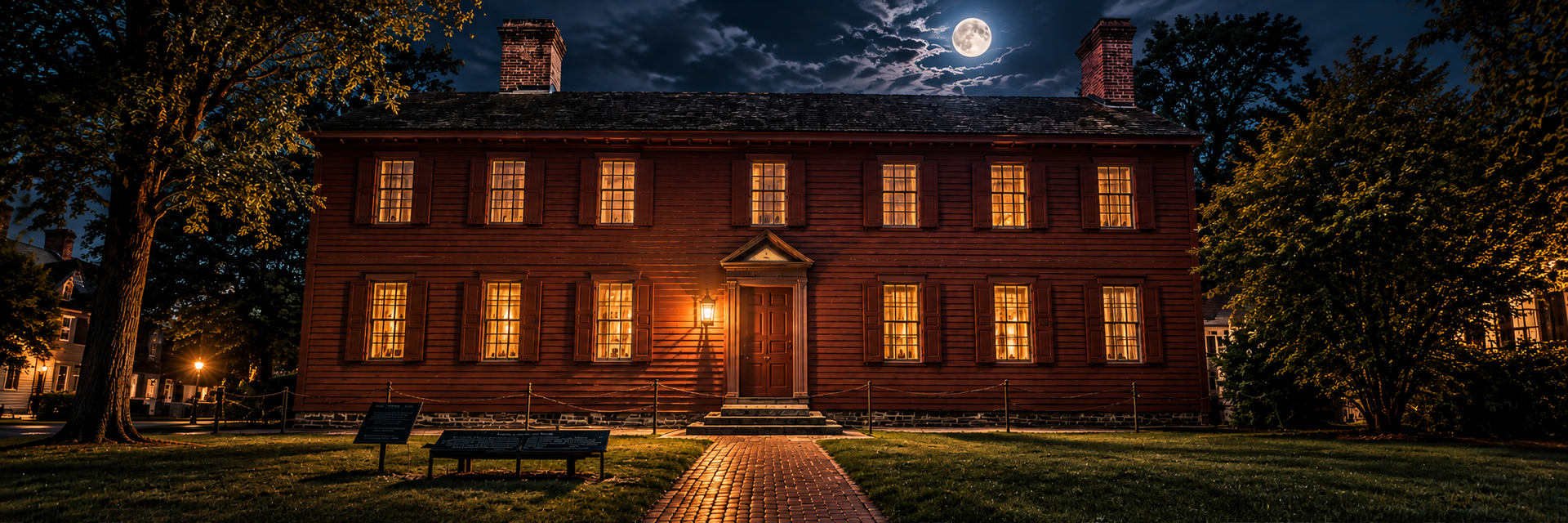
Candles glow behind old windows. Fires burn in hearths. Winter darkness settles over streets that have been traveled for centuries.
Today, ghosts are more likely to make us think of Halloween.
But frightening stories haven't always belonged to October.
For generations, the dark days surrounding Christmas were also a time for stories of ghosts, witches and things that couldn't easily be explained.
And that tradition wasn't entirely foreign to colonial Virginia.
Christmas in Colonial Virginia
Christmas in eighteenth-century Virginia looked very different from the holiday we know today.
There were no strings of electric lights, and many traditions we now consider essential to Christmas came much later. In Anglican communities such as Williamsburg, however, Christmas could mean church, large meals, visiting, dancing, music and plenty of celebration.
And there was storytelling.
Colonial Williamsburg's historical research points to eighteenth-century Christmas entertainment that included traditional tales of ghosts, witches, hobgoblins, fairies and conjurers.
Imagine hearing one of those stories without a television glowing in the next room.
Only a fire.
A candle.
And darkness outside the window.
Why Winter Was Perfect for Ghost Stories
There's a reason supernatural stories fit the season so well.
December brought some of the longest nights of the year. Before electric lighting, darkness was a much greater part of everyday life.
Families and visitors gathered indoors, and storytelling provided entertainment that required nothing more than a willing audience and a good imagination.
The setting did the rest.
A strange noise outside. A shadow beyond the firelight. An old story about someone who died years before.
Winter could make a ghost story feel remarkably close.
Then Came Charles Dickens
The tradition didn't disappear when the colonial era ended.
In Britain, Christmas ghost stories became especially popular during the nineteenth century. Then, in 1843, Charles Dickens published A Christmas Carol.
Scrooge's encounters with Jacob Marley and the spirits of Christmas helped make the supernatural Christmas story famous around the world.
Dickens didn't invent the tradition. He helped carry an older winter custom into a new age.
And more than 180 years later, we're still telling his ghost story every Christmas.
Christmas in Williamsburg Today
Modern Christmas in Williamsburg combines history with traditions that developed long after the colonial period.
Today's familiar candlelit windows, elaborate natural decorations and Grand Illumination create a beautiful holiday atmosphere, but not everything visitors see is a literal recreation of an eighteenth-century Williamsburg Christmas. Colonial Williamsburg itself distinguishes between documented colonial customs and traditions developed during the restoration era.
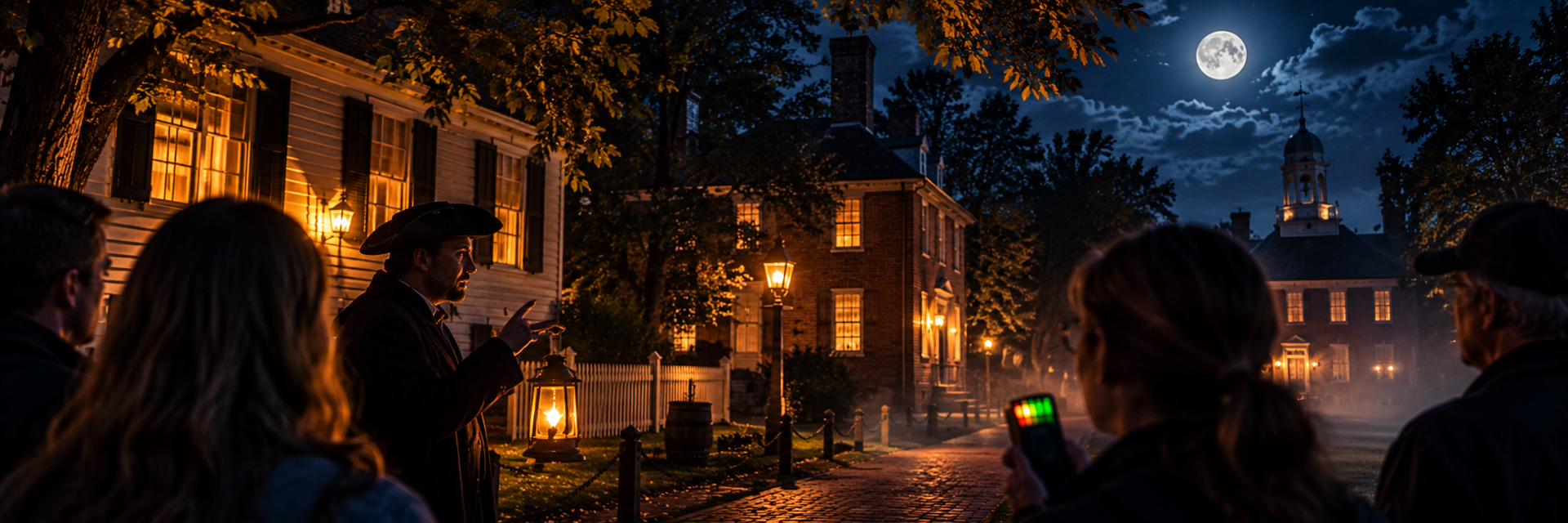
But walk those streets on a cold December evening and something much older still feels perfectly at home.
Old buildings.
Dark windows.
Flickering light.
And stories.
Maybe Ghosts Never Left Christmas
Halloween may have claimed the ghost in modern America, but Christmas never completely let it go.
We still watch A Christmas Carol. We still tell stories beside fireplaces. And we still find something irresistible about an old house on a dark winter night.
In Williamsburg, where centuries of history surround you, that connection seems especially fitting.
Christmas doesn't have to be frightening.
But after the candles are lit and the streets grow quiet...
there's always room for one more ghost story.